
Last updated: January 2026
Utah’s housing market is experiencing explosive growth. January 2026 data reveals median home values reached $548,000—surging 7.3% from the previous year. Properties transition from listing to pending in just 31 days. For owner-builders, these dynamics create urgency around efficient construction methods that capitalize on Utah’s booming demand.
Utah’s economic strength attracts builders seeking opportunity. The state balances rapid population growth with available land, creating sustained housing demand. Strong job markets in tech corridors from Silicon Slopes to downtown Salt Lake City fuel continuous buyer interest. Low unemployment and rising incomes support premium pricing for well-executed homes.
For owner-builders specifically, Utah presents mixed financial realities. Building permits range $1,200-$2,500 across most counties—higher than many states but justified by thorough inspection processes. Subcontractor labor rates run competitive with regional markets, though high demand creates scheduling challenges. Land costs vary dramatically—expect $8,000-$25,000 per acre near Salt Lake City or Utah County, dropping to $3,000-$8,000 in rural counties like Sanpete or Carbon.
Construction expenses range from $135 to $285 per square foot across Utah, with most owner-built homes landing around $175-$220 per square foot when managing your own project. Mountain locations and areas requiring special foundation engineering push toward upper ranges. Valley communities with standard soil conditions achieve lower costs. Regardless of location, managing your own build generates substantial equity compared to purchasing completed homes.

Yet Utah presents unique challenges that can devastate unprepared owner-builders quickly. Dramatic elevation changes—from 2,000-foot valleys to 11,000-foot mountain sites—create varying building codes and foundation requirements. Temperature extremes swing from summer heat exceeding 100°F to winter cold plunging below zero. Heavy winter snow loads, spring runoff challenges, and arid conditions that crack lumber all create construction complications. Traditional stick-framing exposed to these elements suffers dimensional changes, moisture issues, and extended timelines that drain budgets through temporary housing costs and construction loan interest.
Additionally, finding reliable framing crews has become exceptionally difficult across Utah’s booming market. Experienced framers book 4-6 months ahead in Wasatch Front communities, and rural builders face impossible waits. For owner-builders balancing demanding jobs with construction management, coordinating weather windows with crew availability becomes a nightmare.
This raises the critical question for Utah owner-builders from Draper to St. George: how do you capture Utah’s market momentum while eliminating weather delays, reducing skilled labor dependence, and maintaining complete control over your build?
Traditional modular homes advertise convenience but deliver restrictive catalog designs. Smart Utah owner-builders are choosing prefab framing systems—precision-engineered structural components manufactured indoors, then delivered ready for rapid assembly while preserving unlimited design freedom and your budget control.


Understanding your construction options determines project success in Utah’s challenging conditions. Each approach carries unique implications for costs, timelines, and final quality.
What Modular Homes Actually Deliver
Complete modular units ship from factories as fully enclosed rooms. Your design selections come from preset catalogs with limited customization options. Factory production schedules control your timing—anticipate 7-10 months from purchase order through final installation.
Material choices follow manufacturer standards rather than your climate-specific preferences. Foundation precision becomes critical since modules require exact measurements—problematic when dealing with Utah’s diverse soil conditions from rocky mountain terrain to alkaline valley soils. Heavy crane equipment becomes mandatory, eliminating many desirable mountain properties from consideration. Customization requests trigger approval processes that extend timelines and inflate costs.
How Prefab Framing Systems Work Differently
This methodology operates on completely different principles. Structural components—wall panels, floor assemblies, roof trusses—manufacture to your exact architectural plans. Design possibilities remain totally unrestricted with zero catalog limitations.
You maintain complete timeline control, essential when capitalizing on Utah’s hot market and premium pricing opportunities. Structural precision arrives standard, yet every finish selection stays entirely yours. Regular flatbed trucks handle delivery, accessing any Utah property easily. Design modifications, finish changes, or system upgrades remain possible throughout your entire build process.
Utah’s advantage? Factory precision meets total owner control over design, budgets, schedules, and contractor relationships—protecting investment while accelerating completion.
Get your free copy of The DIY Owner-Builder’s Step-by-Step Guide to Shell Completion — a simple, practical roadmap to help you plan, frame, and complete your home’s shell with confidence.
Enter your email to download and receive helpful tips, updates, and exclusive insights to keep your project on track.
Transporting oversized modular units through Utah creates exceptional obstacles. Canyon routes feature hairpin turns, steep grades, and narrow roadways. Getting modules from manufacturing facilities to your property means navigating elevation changes, rock outcroppings that reduce clearances, and seasonal road restrictions. Those attractive building sites with canyon views, ski access, and privacy? Many can’t physically accommodate oversized module delivery equipment.
Established neighborhoods in Park City, Salt Lake foothill communities, and historic Provo districts often feature steep access roads and tight streets that make module transport impossible. You’ll discover these deal-breakers after committing deposits, creating expensive problems.
Utah’s geology is exceptionally diverse. Wasatch Front benches feature rocky soils requiring specialized drilling. West desert areas present alkaline soils demanding specific concrete mixes and waterproofing. Mountain sites face bedrock at varying depths and frost heave concerns. Achieving the millimeter-perfect foundations modular homes require becomes exceptionally difficult when geological conditions vary dramatically across a single property.
One foundation measurement error creates costly delays and potential structural issues. When homes sell in 31 days and market timing determines profitability, foundation problems kill your competitive advantage entirely.
National modular manufacturers rarely understand Utah’s specific construction requirements and inspection protocols. Utah building inspectors know state codes inside and out—factory teams from distant regions don’t. This knowledge gap creates inspection friction, generates approval delays, and sometimes requires expensive modifications before occupancy permits get issued.
Local inspectors enforce Utah-specific requirements around snow loads varying by elevation, seismic considerations in certain zones, and energy efficiency standards that out-of-state manufacturers often miss completely.
Advertised modular pricing excludes Utah realities that dramatically inflate final costs:
These hidden expenses frequently push total modular costs above traditional construction, completely eliminating advertised savings. You’ve sacrificed design freedom and faced logistical nightmares without achieving financial benefits.
Prefab framing resolves Utah’s construction obstacles through controlled indoor manufacturing, then delivering components that assemble efficiently regardless of weather, temperature, or site access.
Wall panels, floor systems, and roof trusses ship precision-built to your exact specifications. Indoor fabrication protects materials from Utah’s temperature extremes, low humidity that splits lumber, and precipitation—enabling delivery of installation-ready elements that go up fast.
Your installation crew assembles factory-perfect components instead of battling Utah weather, warped lumber, or dimensional inconsistencies during structural work.
Panels ship ready to install, supporting whatever architectural vision you’re building—whether that’s a compact single-story rambler or a towering two-story mountain contemporary. Heights range from standard 8-foot walls up to dramatic 14+ foot great room configurations. Lengths between 8-16 feet mean efficient layouts that match your floor plan exactly.
You’ll get either 2×4 or 2×6 framing depending on your insulation strategy and Utah’s building requirements. Sheathing upgrade options are selected to withstand the state’s notorious temperature extremes and bone-dry climate without warping or splitting. Every window and door opening gets framed to your exact specifications at the factory, which means zero measurement mistakes on site.
Choose between engineered I-joists or open web trusses based on what your design demands. Standard deflection ratings meet L/360 minimums, with stronger options when you’re installing tile or hardwood that can’t tolerate movement. Joist spacing runs anywhere from 16 to 24 inches on center to handle whatever load requirements you’re working with.
Openings for stairs, HVAC runs, and utility chases arrive already built into the system. Necessary joist hangers and rim boards ship with your order—no mid-project material runs when your crew is trying to stay on schedule.
Every truss gets engineered specifically for your project with sealed documentation that keeps Utah county permitting smooth. Manufacturing accounts for the state’s varying snow loads by elevation, wind resistance requirements, and local building standards—which means inspectors approve without drama.


Traditional Utah framing requires 6-11 weeks under perfect conditions. Weather delays routinely extend this to 12-16 weeks when accounting for winter snow, spring mud season, and summer afternoon thunderstorms. Prefab framing compresses structural work into just 1-3 weeks regardless of weather—critical when homes close in 31 days and timing drives profitability.
Utah Example: A 3,600 square foot custom home in Draper completed structural dry-in in just 17 days during March—traditionally problematic with late-season snow and temperature fluctuations. Conventional framing would have needed 7-11 weeks with multiple weather delays. The owners moved interior work forward by nine weeks, completing their build ahead of schedule.
Finding qualified framers grows exceptionally difficult across Utah’s booming market. Prefab framing slashes skilled labor requirements by 60% while maintaining quality that passes Utah’s thorough inspections easily.
Owner-Builder Success: Utah’s strong economy attracts numerous first-time owner-builders seeking equity through sweat investment. Prefab framing converts intimidating structural complexity into straightforward installation, backed by detailed instructions and precision components that fit perfectly.
Climate-controlled manufacturing eliminates Utah’s weather variables completely. Materials never experience moisture during spring runoff season. Summer heat doesn’t warp lumber. Winter cold doesn’t affect dimensional accuracy during production.
Subcontractor Advantage: HVAC installers, electricians, drywall crews, and trim carpenters work faster when framing dimensions stay accurate. No constant adjustments compensating for crooked walls or out-of-square corners—they deliver quality finishes Utah buyers expect on schedule.
Utah construction commands premium pricing at $135-$285 per square foot. Prefab framing locks material pricing during manufacturing, protecting budgets from market volatility while reducing waste by 15-20%—preserving profit margins in Utah’s competitive market.
Material waste on conventional job sites costs $5,500-$11,000 on typical 2,500 square foot homes. Factory precision eliminates this expense entirely.

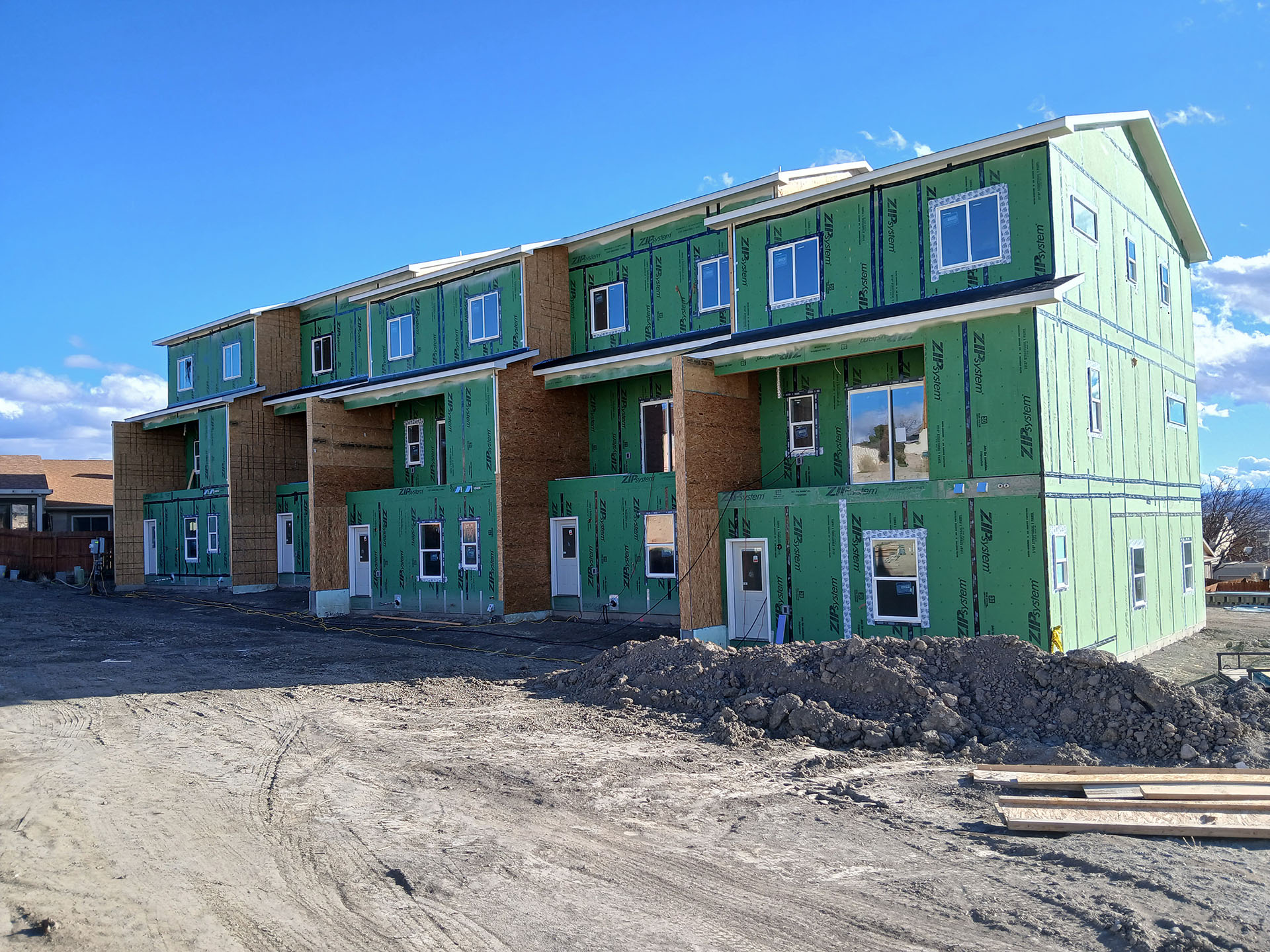
Utah’s strong market draws many first-time owner-builders ready to invest effort for substantial equity gains. Prefab framing makes challenging projects achievable:
Custom builders integrate prefab framing seamlessly with unique designs while protecting profit margins:
Multi-home projects gain substantial advantages through prefab systems:
Step 1: Project Initiation Stage
Submit your plans or select from standard available models. Green-R-Panel’s team reviews your project requirements thoroughly. You receive a detailed quote based on your exact specifications.
Step 2: Custom AutoCAD Design
Your home’s structural components receive precision AutoCAD design. Every panel, joist, and truss fits perfectly together. You review and approve all layouts before manufacturing begins.
Step 3: Factory Production
Precision wall panels and engineered floor and roof systems manufacture in controlled environments. Components load into logical shipments for efficient delivery to your site.
Step 4: Job Site Delivery
Components arrive in 1-2 logical loads based on project size. Installation sequence guidance accompanies every delivery package. This minimizes job site congestion and confusion throughout assembly.
Step 5: Installation Support
Phone and email support available throughout installation process. Component layouts, framing drawings, and sealed truss engineering documentation included with delivery.

Utah builders consistently document measurable prefab framing advantages:
Labor Expense Reduction: Up to 60% decrease in skilled framing labor typically saves $13,000-$29,000 on 2,500 square foot homes—significant savings that upgrade finishes or reduce total costs.
Material Waste Elimination: 15-20% waste reduction saves $4,500-$10,000 through controlled production versus field cutting and fitting.
Schedule Acceleration: 6-8 week timeline compression reduces carrying costs and enables faster completion—vital in Utah’s competitive market where timing impacts success.
Quality Improvement: Fewer callbacks and warranty issues boost long-term profitability while building your reputation for excellence.
Prefab framing delivers optimal results for specific Utah construction scenarios:
Starting your project requires several key elements:
Typical project timelines include these phases:
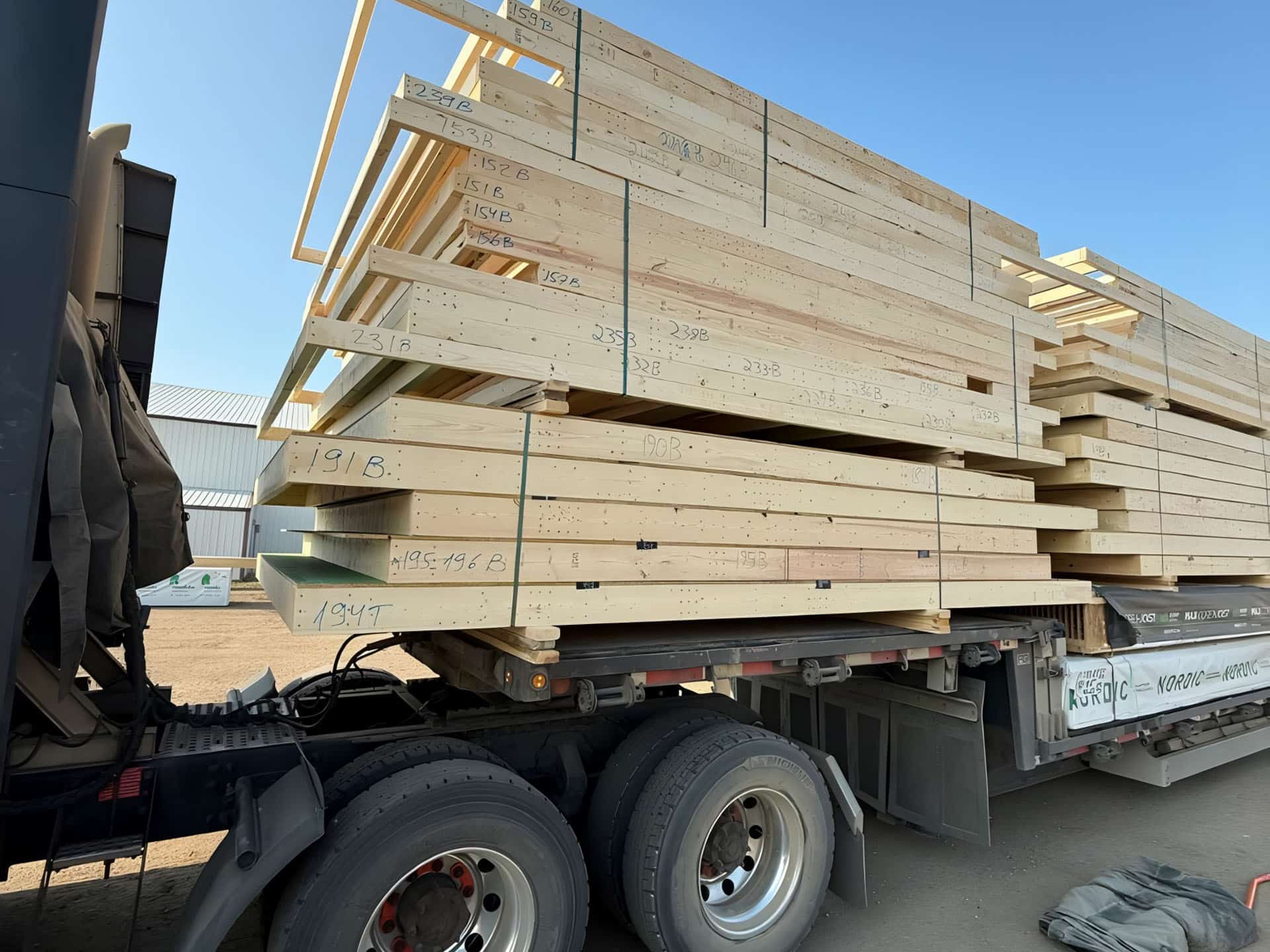
Utah’s housing market continues rewarding builders who respond quickly while maintaining quality standards. Median prices reached $548,000 in January 2026, with tight inventory driving fierce competition. Opportunities exist for efficient builders delivering quality homes rapidly.
Conventional construction methods face growing obstacles: weather unpredictability, labor scarcity, and material waste. Builders using efficient methodologies while leveraging Utah’s premium pricing will capture market share.
Whether planning Salt Lake City custom construction, Utah County developments, or St. George projects, prefab framing provides validated solutions for Utah’s competitive environment.
Utah prefab homes shouldn’t force choices between quality and speed. Prefab framing systems deliver factory precision matching your specifications while preserving complete design freedom and Utah’s premium market opportunities.
Contact Green-R-Panel today for Utah project consultation. From initial planning through final delivery, we provide expertise and support for successful construction in Utah’s dynamic market.
Launch your Utah-focused consultation and discover how prefab framing systems optimize your building project.