
Last updated: January 2025
New Mexico’s housing market shows balanced momentum as 2025 closes. November 2025 brought median prices to $403,100—up 12.8% year-over-year—while homes averaged 69 days on market. The state’s appeal extends beyond dramatic landscapes, with living costs running approximately 5% below national averages drawing residents seeking affordability paired with Southwestern lifestyle.
Market dynamics reveal interesting patterns. Inventory rose to 5,108 homes in November, up 4.2% year-over-year, with average supply reaching 6 months. Just 2.3% of homes sold above list price—down from previous year—while 17.4% experienced price reductions. This creates negotiating opportunities for strategic builders and buyers alike.
Albuquerque maintains pricing strength across neighborhoods. Las Cruces median values reached $282,928 according to recent data, showing 7.4% annual appreciation. Santa Fe commands premium positioning around $573,000 in desirable areas, reflecting cultural appeal and restricted buildable inventory. Rio Rancho offers comparative accessibility, attracting families seeking space without premium pricing.
Smaller markets present distinct opportunities. Farmington and Roswell maintain accessibility below $240,000 median, creating entry points for builders targeting underserved demographics. Communities like Taos draw buyers seeking mountain lifestyle, supporting specialized construction approaches.
Building economics fluctuate considerably across regions. Construction costs range $100-$180 per square foot statewide, though premium locations push higher. Albuquerque projects typically run around $180 per square foot. Santa Fe’s architectural requirements and terrain challenges drive costs toward $200-$300 per square foot for compliant designs. Rural areas often achieve lower rates, balanced against logistics considerations.
Labor comprises 25-35% of construction budgets statewide. Traditional site-built timelines stretch 9-12 months from foundation to completion certificate. Permit structures vary dramatically—Albuquerque assessments differ significantly from smaller county requirements, affecting project budgets.
For builders and owner-builders operating across New Mexico—from Taos to Silver City—one question dominates: how do you deliver quality construction efficiently while managing costs in an environment facing labor constraints and regulatory variations?
Traditional modular construction imposes catalog limitations. Smart New Mexico builders select prefab framing systems—factory-manufactured structural components arriving job-ready while preserving complete design flexibility and local material sourcing control.
New Mexico’s construction landscape demands understanding different prefab methodologies. Each strategy carries specific implications for scheduling, expense management, and design freedom.
Factory-assembled room sections arrive from distant manufacturing facilities. Design options come from predetermined catalogs with minimal customization capacity. Production scheduling remains beyond your influence—anticipate 5-7 months from order to delivery. Material specifications follow manufacturer standards rather than your selections. Foundation tolerances must achieve precision challenging in New Mexico’s varied soil compositions. Transportation through mountain corridors and rural routes adds complexity layers. Local inspectors may lack familiarity with distant manufacturer protocols.
This approach functions on fundamentally different principles. Factory-produced structural elements—wall panels, engineered floor assemblies, roof trusses—match your precise specifications. Architectural possibilities remain unrestricted. Schedule control stays entirely in your hands—essential when responding to market timing. You choose all finish materials from preferred or local suppliers. Standard delivery trucks access virtually any New Mexico location. Design modifications, finish changes, or system adjustments stay possible throughout construction phases. Your contractor partnerships and material sourcing decisions remain yours alone.
The New Mexico benefit? Manufacturing precision merges with total local control over design direction, budget management, timeline execution, and partnership selections—safeguarding your vision while accelerating completion.
Get your free copy of The DIY Owner-Builder’s Step-by-Step Guide to Shell Completion — a simple, practical roadmap to help you plan, frame, and complete your home’s shell with confidence.
Enter your email to download and receive helpful tips, updates, and exclusive insights to keep your project on track.
Geographic Obstacles: Moving oversized modules across New Mexico’s landscape—from Albuquerque’s metro expansion through mountain passes to isolated mesa sites—generates substantial hurdles. Width limitations on Interstate corridors through elevation changes restrict module dimensions. Rural properties with narrow access eliminate modular delivery possibilities entirely.
Foundation Precision Demands: New Mexico’s expansive clay soils and caliche formations make achieving exacting foundation tolerances modular units require exceptionally challenging. Soil movement from moisture fluctuation compounds difficulties. Single measurement errors create expensive delays when construction windows stay narrow.
Regulatory and Aesthetic Alignment: Santa Fe’s stringent Territorial Revival mandates, Taos’s pueblo-style requirements, and county-specific standards rarely align with national manufacturer offerings. Local building departments understand New Mexico codes—distant factory teams don’t.
Actual Cost Discovery: Advertised base pricing excludes New Mexico realities: foundation engineering for challenging soils, utility extensions across large lots, specialized transportation logistics, crane rental and operation, site-specific adaptations, and variable permit assessments. Final expenses frequently exceed comparable site-built alternatives, eliminating affordability advantages.
Prefab framing addresses New Mexico’s building challenges through controlled factory production of structural fundamentals, then delivering components assembling efficiently regardless of site conditions or altitude.
Wall panels, floor systems, and roof trusses arrive manufactured to your project specifications. Indoor fabrication shields materials from New Mexico’s intense UV exposure, dramatic temperature swings, and summer monsoon patterns. Components reach jobsites ready for immediate installation.
Installation crews work with factory-precise elements rather than battling elevation effects on lumber dimensions, material distortion from humidity variations, or measurement inconsistencies during framing phases.
AutoCAD-Designed Wall Panel Systems
Green-R-Panel’s exterior and interior wall panels arrive ready for immediate installation across New Mexico’s diverse architectural styles. Standard heights of 8′, 9′, and 10′ accommodate most residential construction, with custom heights available for pueblo-inspired designs or contemporary great rooms. Panel lengths typically range 8′-12′, optimized for window and door configurations specified in your plans.
Standard 2×4 or 2×6 framing at 16″ on center meets New Mexico’s wind and seismic requirements. Panels come with 7/16″ OSB sheathing, with upgrades to plywood or ZIP systems available for enhanced moisture and UV resistance—critical in New Mexico’s high-desert climate. Every window and door opening arrives precisely framed to your specifications, eliminating on-site measuring errors.
Engineered I-Joist Floor Systems
Green-R-Panel’s floor systems use engineered I-joists or open-web trusses depending on your foundation type and span requirements. All systems meet L/360 deflection minimums, with enhancement options available for tile, stone, or saltillo finishes common throughout New Mexico homes. Spacing options of 16″, 19.2″, or 24″ on center accommodate varying load requirements.
Stairwell openings, crawl space access points, and utility chases come pre-cut to your specifications. Every system includes necessary joist hangers and rim board, arriving ready for installation without additional fabrication.
Custom Engineered Roof Truss Systems
Roof trusses are designed specifically for your project using your architectural plans and New Mexico’s regional load requirements. Each truss system includes sealed engineering drawings—essential for smooth permit approval across New Mexico jurisdictions from Albuquerque to Santa Fe to rural counties.
Trusses arrive manufactured to accommodate snow loads in northern mountain regions, wind ratings for exposed high-desert sites, and span requirements for your specific design—whether traditional pitched roofs or contemporary flat-roof aesthetics.


Conventional framing in New Mexico demands 4-9 weeks depending on weather patterns, crew availability, and elevation factors. Prefab framing compresses structural operations to 1-3 weeks independent of conditions—critical when market timing determines profitability.
Documented Success: A 2,800 square foot residence in Rio Rancho achieved complete structural assembly in 11 days—traditional approaches would have required 6+ weeks. Interior trades commenced five weeks earlier in a market where completion speed directly impacts returns.
New Mexico construction confronts persistent skilled labor limitations despite competitive regional compensation. Experienced framers remain scarce, particularly in rural markets. Prefab framing reduces skilled labor requirements by 60% while maintaining quality benchmarks.
Owner-Builder Achievement: New Mexico’s relative affordability attracts numerous owner-builders. Prefab framing converts complex structural operations into manageable installation using detailed guidance and precision-manufactured components.
Factory-controlled production eliminates New Mexico’s construction variables. UV exposure doesn’t compromise materials pre-installation. Temperature and moisture fluctuations don’t affect dimensional accuracy. Crew experience variations don’t create quality inconsistencies.
Trade Contractor Benefits: Dimensional reliability enables drywall installers, flooring specialists, and trim carpenters to operate efficiently without constantly adjusting for framing irregularities—delivering the finishes New Mexico purchasers expect.
New Mexico construction expenses vary significantly by location and market conditions. Prefab framing secures material costs during manufacturing, shielding budgets from price volatility while minimizing waste—essential for maintaining competitive positioning.

Owner-Builders Pursuing Affordability
New Mexico’s lower construction costs attract first-time owner-builders. Prefab framing transforms challenging projects into achievable construction:
Custom Home Builders
Professional builders integrate prefab framing fluidly with distinctive designs while defending profit margins:
Small Development Operations
Multi-unit projects benefit from prefab advantages:
Step 1: Collaborative Project Review
Submit your plans or select from standard available models. Green-R-Panel’s team reviews your project requirements thoroughly. You receive a detailed quote based on your exact specifications.
Step 2: Custom AutoCAD Design
Your home’s structural components receive precision AutoCAD design. Every panel, joist, and truss fits perfectly together. You review and approve all layouts before manufacturing begins.
Step 3: Factory Production
Precision wall panels and engineered floor and roof systems manufacture in controlled environments. Components load into logical shipments for efficient delivery to your site.
Step 4: Job Site Delivery
Components arrive in 1-2 logical loads based on project size. Installation sequence guidance accompanies every delivery package. This minimizes job site congestion and confusion throughout assembly.
Step 5: Installation Support
Phone and email support available throughout installation process. Component layouts, framing drawings, and sealed truss engineering documentation included with delivery.
Missouri builders report consistent prefab framing benefits:
Workforce Savings: 60% skilled framing decrease typically preserves $14,000-$26,000 on 2,500 sq ft homes
Material Conservation: 15-20% waste reduction preserves $4,000-$9,000 through controlled production
Schedule Benefits: 4-6 week acceleration preserves carrying expenses, enables quicker completion—vital for Missouri’s migration-driven market
Quality Outcomes: Decreased callbacks and warranty issues enhance sustained profitability
Prefab framing systems work exceptionally well for:
Starting your project requires several key elements:
Typical project timelines include these phases:
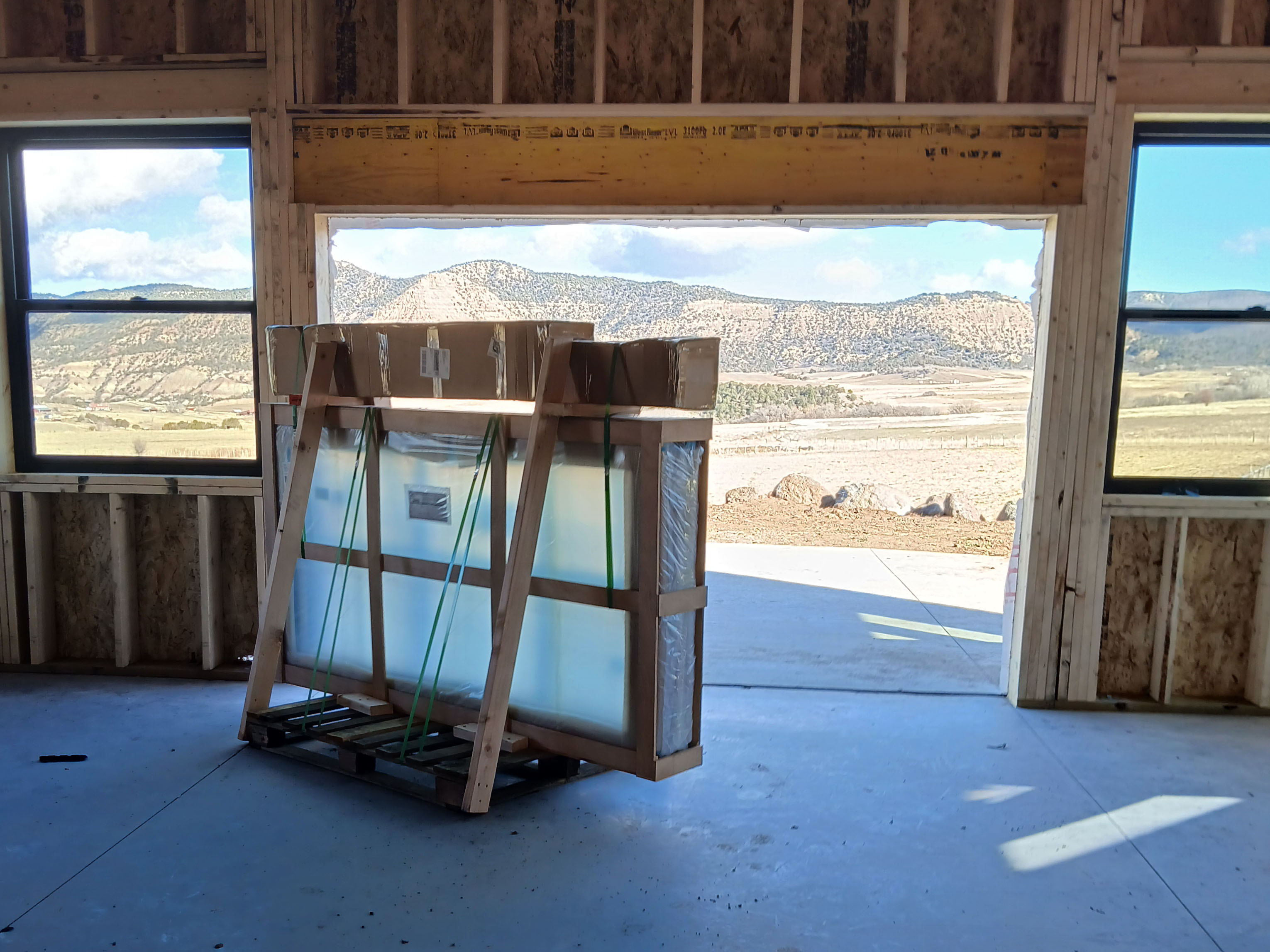
New Mexico’s housing market rewards builders responding efficiently while maintaining quality standards. Statewide appreciation continues with November 2025 showing 12.8% year-over-year gains, while inventory increases provide more balanced conditions. Opportunities exist for builders delivering homes efficiently in this evolving landscape.
Traditional construction confronts mounting timeline and workforce obstacles. Builders commanding efficient methodologies while navigating New Mexico’s unique requirements will capture market opportunities.
Whether planning Albuquerque custom construction, Las Cruces developments, or Santa Fe projects, prefab framing provides validated solutions for New Mexico’s distinct building environment.
New Mexico prefab homes don’t require compromising vision for efficiency. Prefab framing systems deliver factory precision matching your specifications while preserving complete design freedom and construction control.
Contact Green-R-Panel today to discuss your New Mexico project. From initial consultation through final delivery, we provide expertise and support for successful construction in New Mexico’s dynamic housing market.
Start your New Mexico-focused consultation to discover how prefab framing systems can optimize your building project.