
Last updated: January 2026
Mount Rushmore State real estate presents unique opportunities for strategic owner-builders right now. Home values hit $285,000 in January 2026—up 4.3% year-over-year. The market moves efficiently, with properties transitioning from listing to under-contract status in roughly 45 days.
Speed matters when inventory stays tight. Smart builders who can accelerate timelines while controlling costs win in this environment.
South Dakota’s housing affordability stands out nationally despite recent appreciation. Purchasing a median-priced home requires approximately 4.8 years of median household income—far more reasonable than the 10-15 year requirements in major metro markets. Factor in low property taxes (ranking 5th lowest nationally), manageable insurance costs, and business-friendly development regulations, and owner-builders discover genuine financial advantages here.
The numbers improve dramatically when you take control of construction yourself. Residential building permits across most South Dakota counties cost $300-$650—among the nation’s lowest fees. Subcontractor labor rates run 30-40% below what you’d encounter in Minneapolis or Denver markets, though finding available crews presents challenges. Land prices vary from $2,800-$9,500 per acre based on proximity to Sioux Falls or Rapid City, providing substantial acreage opportunities.
Construction expenses range from $110 to $240 per square foot throughout South Dakota. Owner-managed projects generally cost between $155-$195 per square foot when you handle subcontractor coordination and material sourcing directly. Western regions with challenging terrain push higher, while eastern prairie locations achieve lower costs. Either way, you’re building 20-35% below what similar projects cost in surrounding states.

The Mount Rushmore State’s continental climate creates brutal construction obstacles that unprepared builders underestimate. Winter temperatures plunge below -20°F regularly, with wind chills reaching -50°F across the plains. Summer heat spikes above 105°F. Temperature swings of 60-80 degrees within 24 hours aren’t unusual during spring and fall transitions.
Traditional stick-framing exposed to these extremes suffers severe consequences. Lumber dimensions shift dramatically as materials freeze, thaw, and dry repeatedly. Framing crews can’t work effectively during blizzards, ice storms, or dangerous wind events. Construction seasons compress into roughly 6-7 months realistically, forcing rushed schedules that compromise quality.
These delays compound quickly. Extended timelines burn construction loan interest and temporary housing costs. Finding experienced framing crews who can work efficiently during South Dakota’s limited building season becomes increasingly difficult. Skilled framers book their entire season by early spring, leaving latecomers scrambling for availability.
This situation creates a critical decision point for South Dakota owner-builders from Brookings to Spearfish: how do you maximize the state’s affordability benefits while sidestepping extreme weather obstacles, minimizing dependence on scarce skilled labor, and keeping total control over your project?
Conventional modular homes offer apparent simplicity but trap you in restrictive factory designs. Savvy South Dakota owner-builders are discovering prefab framing systems—precision-manufactured structural elements built in controlled environments, then shipped ready for fast assembly while maintaining complete design flexibility and budget authority.
The construction method you select fundamentally determines whether your project succeeds within South Dakota’s compressed building season. Each option presents different tradeoffs for budget, schedule, and final results.
Modular construction ships entire room sections as fully finished boxes from distant factories. Your design options come from manufacturer catalogs offering limited variation. Production scheduling at the factory dictates your timeline—plan on 7-9 months from order placement to final site installation.
Materials follow factory standards rather than South Dakota’s specific climate demands. Foundation work must achieve perfect accuracy since modules need precise placement—difficult when working with South Dakota’s frost heave-prone soils or rocky Black Hills terrain. Large crane equipment becomes essential, ruling out many appealing rural properties with access limitations. Any design changes trigger approval chains that balloon costs and extend already lengthy timelines.
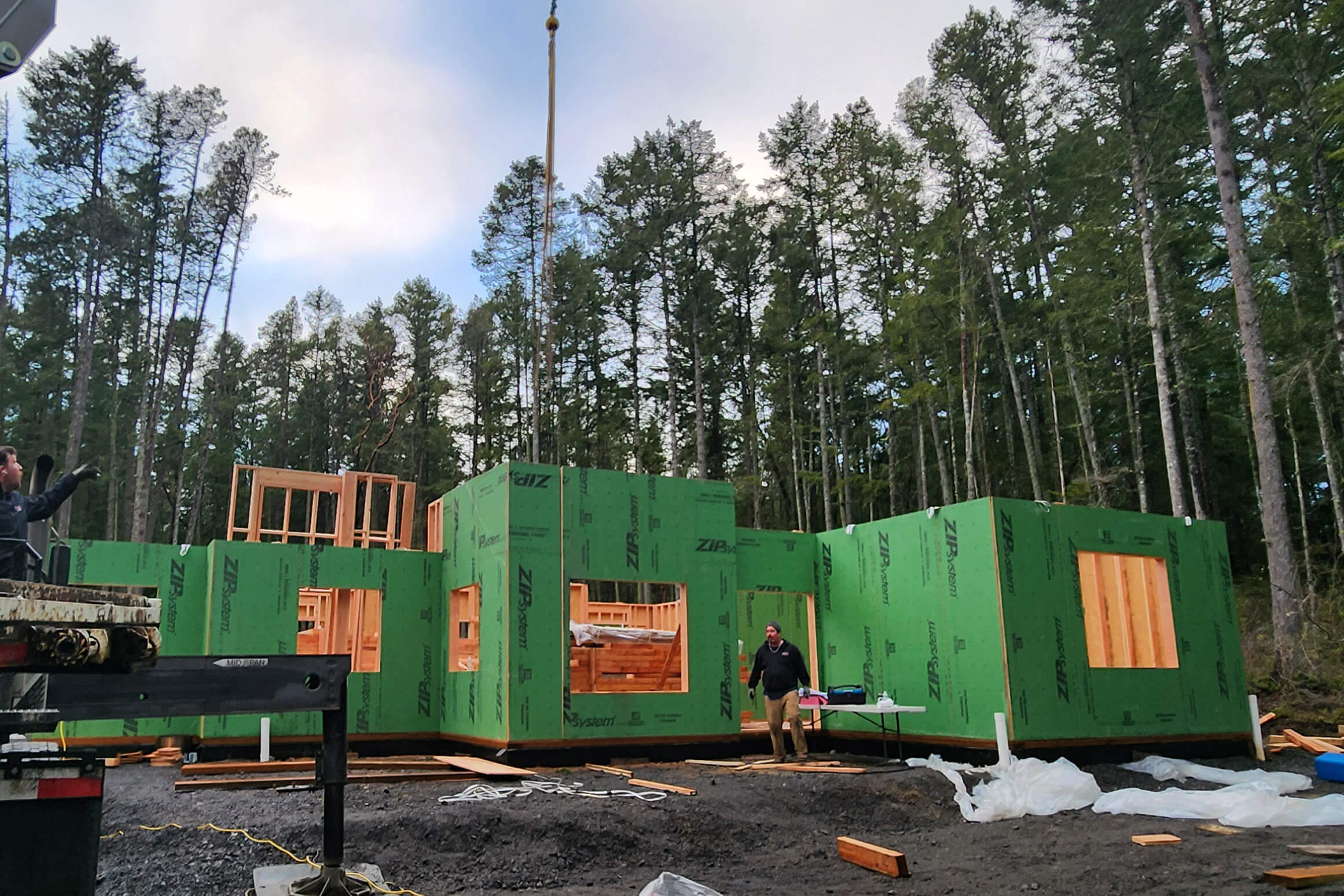
This building approach works from completely different assumptions. Individual structural pieces—wall panel sections, floor systems, roof truss assemblies—get built to your exact plans. Design freedom stays unlimited without catalog restrictions whatsoever.
Timeline control remains in your hands, crucial when working within South Dakota’s short construction window where every week counts. Structural accuracy comes standard, while all finish decisions stay completely yours. Normal delivery trucks bring everything to site, reaching even remote properties throughout the state. You can modify designs, change finishes, or upgrade systems throughout construction without manufacturer approvals or delays.
South Dakota’s benefit? Manufacturing precision combines with complete owner authority over design choices, spending decisions, construction timing, and contractor selection—protecting your budget while maximizing your compressed building season.
Get your free copy of The DIY Owner-Builder’s Step-by-Step Guide to Shell Completion — a simple, practical roadmap to help you plan, frame, and complete your home’s shell with confidence.
Enter your email to download and receive helpful tips, updates, and exclusive insights to keep your project on track.
Getting Oversized Units Across South Dakota
Transporting complete modular sections through South Dakota generates major logistical problems. Delivery routes from distant manufacturing plants require navigating narrow rural highways, low railroad underpasses, and roads not designed for oversized loads. Beautiful building locations—especially those with mountain access, prairie remoteness, or river views—frequently can’t accommodate large module transport.
Historic downtown districts in Pierre, Deadwood, and Vermillion feature street layouts that physically prevent oversized module delivery. Rural properties with gravel access roads, single-lane bridges, or seasonal weight restrictions also create problems. These limitations surface after you’ve committed deposits, forcing costly project redesigns or site changes.
Foundation Challenges in South Dakota Soils
Eastern South Dakota features deep topsoil over clay that experiences significant frost heave during winter freezes. Western regions include rocky terrain and bentonite clays that expand dramatically with moisture. Black Hills locations present granite bedrock requiring specialized foundation approaches. Achieving the exact foundation tolerances modular units demand becomes exceptionally difficult when soil behavior varies so dramatically across the state.
Even minor foundation errors create expensive problems and schedule disruptions. When properties sell in 45 days and market timing determines profitability, foundation complications destroy your competitive position completely.
Extreme Temperature Construction Codes
South Dakota building codes mandate specific insulation values, foundation frost depth requirements, and structural engineering for snow loads and high winds. National modular manufacturers frequently miss these regional specifics. Local building departments thoroughly understand South Dakota’s requirements—distant factory teams don’t share that knowledge.
This disconnect causes inspection failures, approval delays, and sometimes expensive on-site modifications before occupancy permits get issued. You’ve locked into a design that doesn’t meet local winter survival standards without discovering it until inspections reveal the problems.
True Cost Reality Beyond Base Pricing
Advertised modular costs omit South Dakota-specific expenses that transform seemingly affordable pricing into budget-busting reality. Foundation engineering for frost protection, utility installation through frozen ground, long-distance transport fees, crane rental ($4,500-$8,000 per day), code compliance modifications, and permit costs accumulate rapidly.
These additional charges often push final modular costs above conventional stick-built pricing, wiping out any advertised savings entirely. You’ve given up design control and dealt with transportation headaches while spending more money than traditional construction would have cost.
Engineered framing components solve South Dakota’s construction problems through indoor manufacturing that shields materials from temperature extremes, then shipping pieces that assemble quickly regardless of weather conditions, seasonal timing, or property accessibility.
Wall sections, floor frameworks, and roof assemblies arrive built precisely to your specifications. Indoor production prevents freeze-thaw cycles from affecting lumber. Temperature-controlled environments mean materials maintain dimensional accuracy from fabrication through installation.
Your assembly crew works with factory-precision components instead of fighting extreme temperatures, dimensionally unstable lumber, or weather delays during framing stages. This advantage proves invaluable when your construction window spans just half the year realistically.
Ready-to-install wall panel sections work with any architectural approach from traditional farmhouse aesthetics to modern prairie contemporary. Wall heights spanning 8 feet through 16+ feet accommodate everything from single-story ranch layouts to dramatic two-story Black Hills retreats. Section lengths of 8-16 feet configure efficiently around your floor plan requirements.
Lumber framing uses 2×4 or 2×6 construction with spacing designed for South Dakota’s extreme insulation demands and structural requirements. Enhanced sheathing upgrade options resist temperature cycling and moisture penetration reliably. Window and door rough openings arrive cut precisely to specifications, preventing measurement errors that waste materials and time during sub-zero installation conditions.
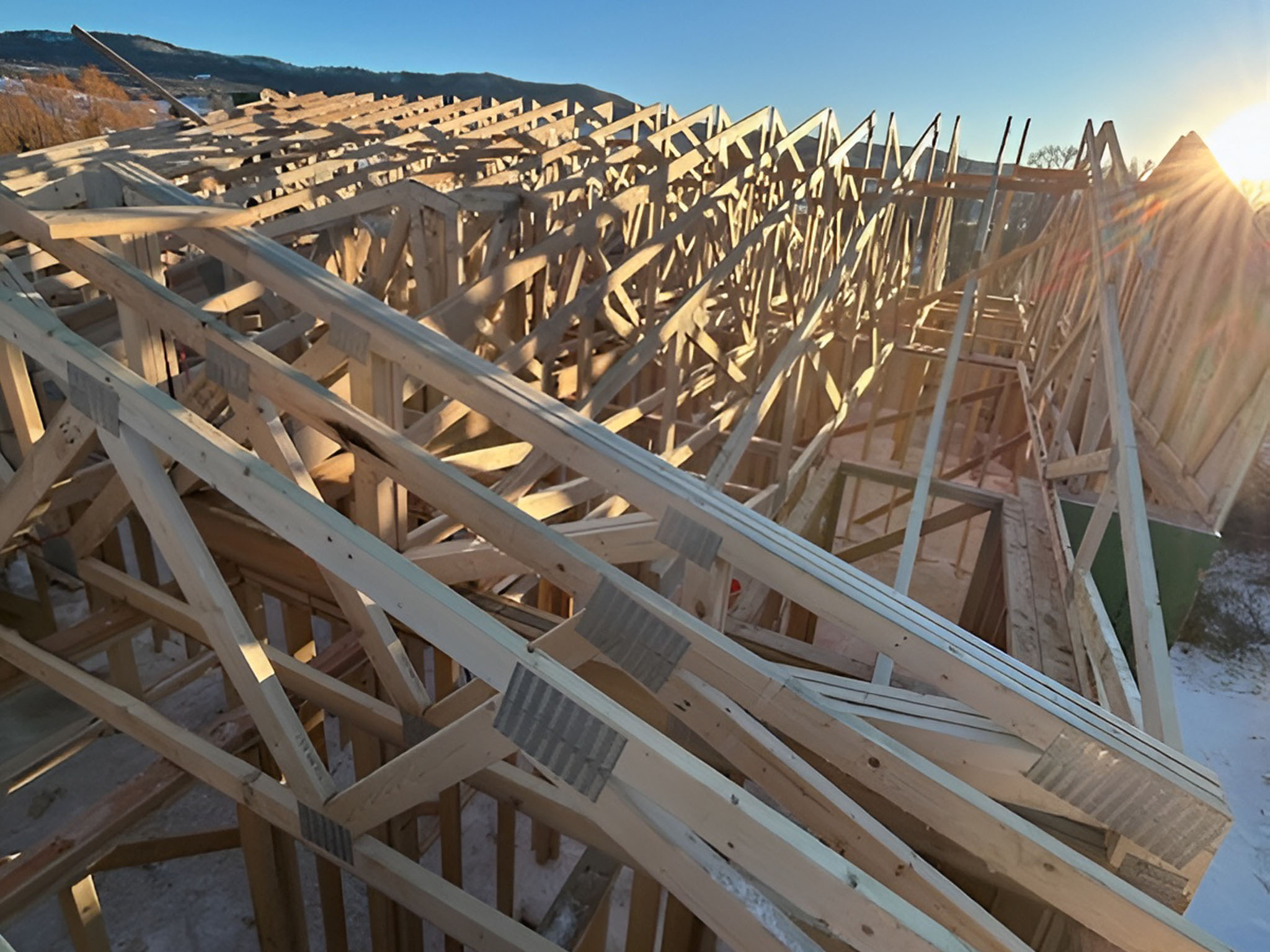
Manufactured I-joist or truss assemblies meet your specific load and span needs. Standard L/360 deflection specifications come included, with enhanced options for ceramic tile or engineered hardwood installations. Spacing from 16 inches to 24 inches on center handles different load scenarios.
Stair openings, mechanical chases, and utility penetrations arrive pre-configured to your plans. Hangers and rim components ship included, eliminating supply runs when working against South Dakota’s weather clock.
Manufactured Roof Truss Assemblies
Trusses design specifically for your project’s snow load requirements and wind resistance needs. Complete engineering stamps facilitate efficient permitting across all South Dakota counties. Manufacturing incorporates regional building standards including snow load calculations and high wind provisions, guaranteeing inspection approval.

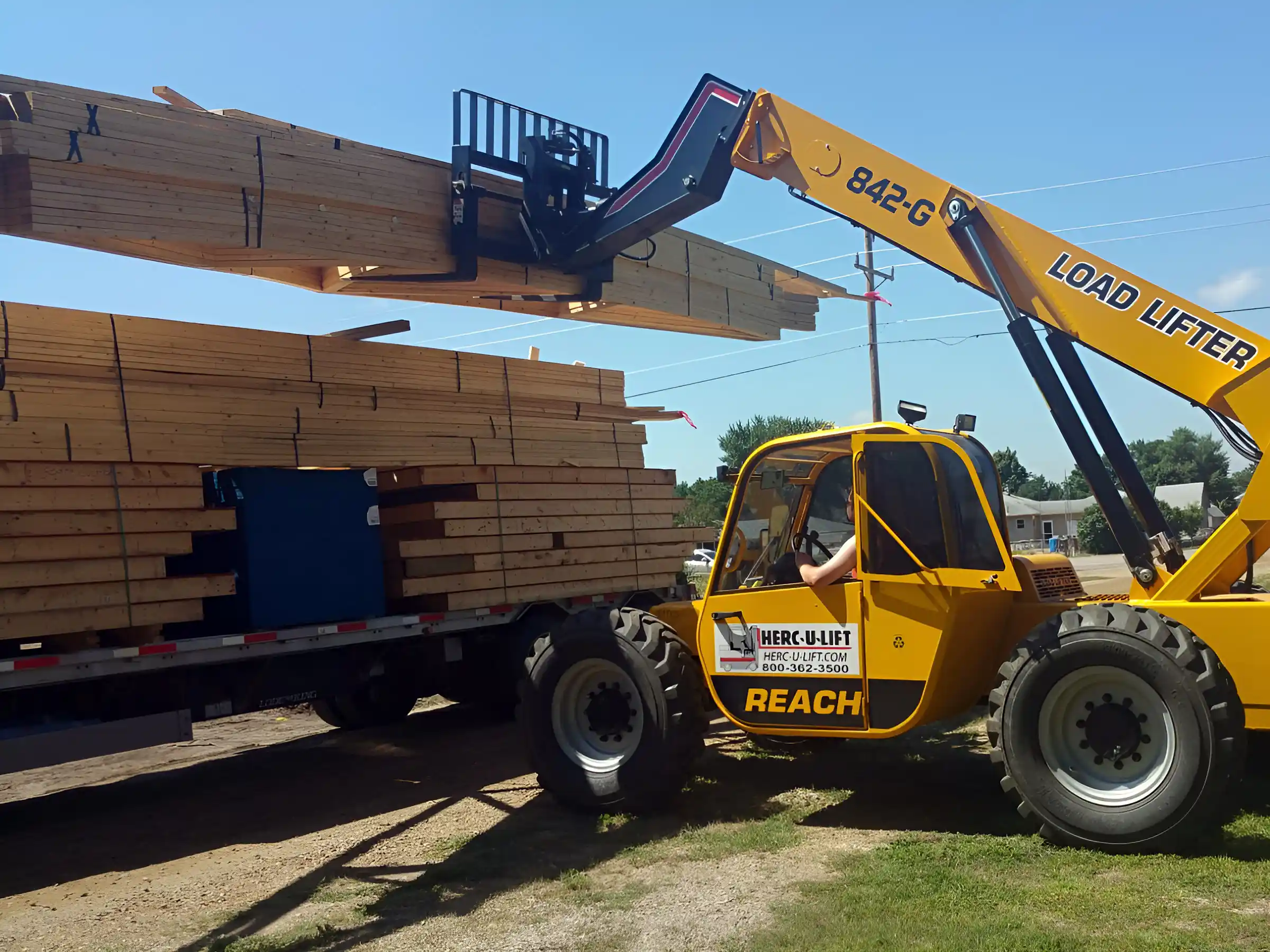

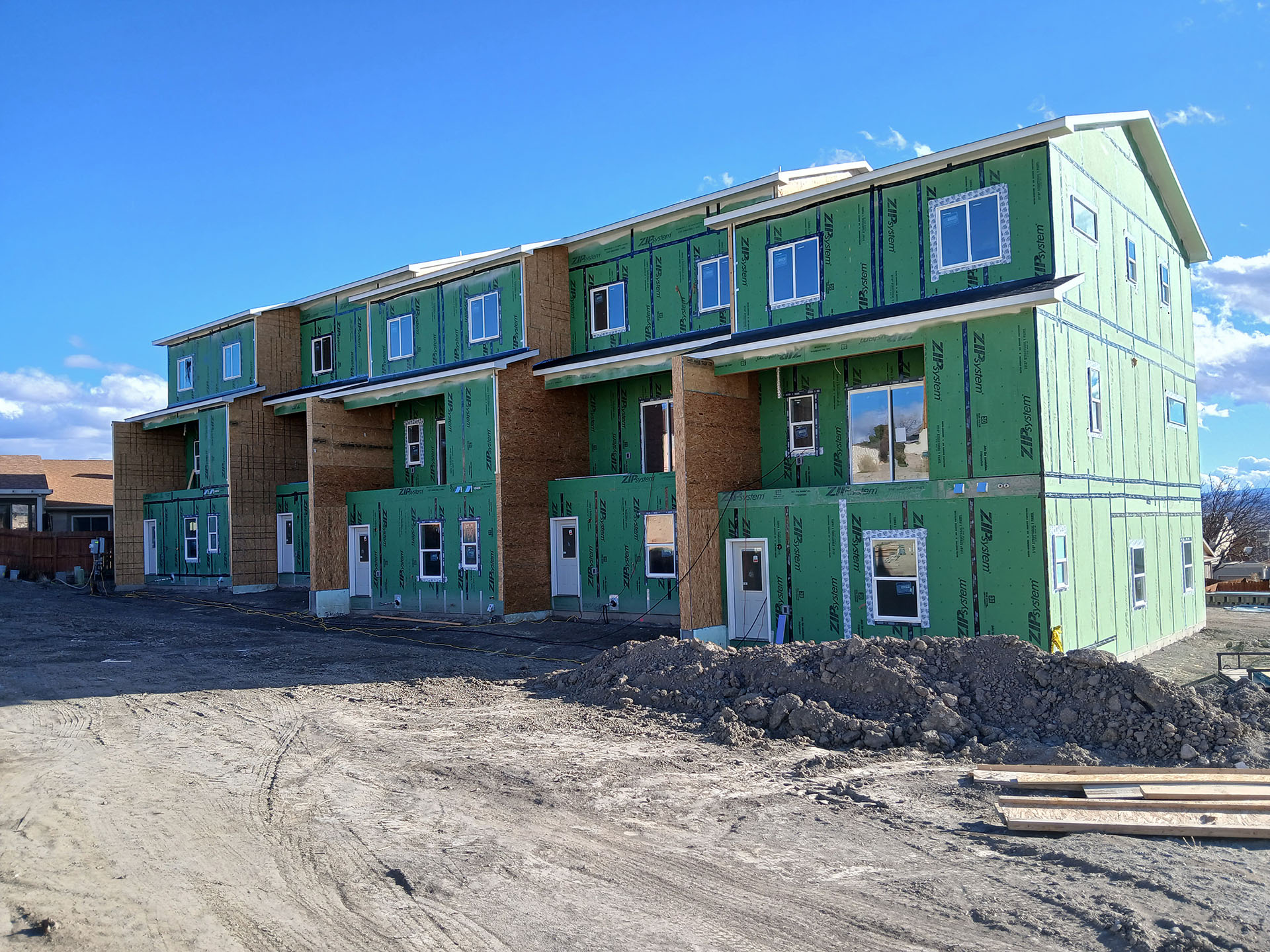
Conventional South Dakota framing demands 8-12 weeks under cooperative weather—rare in this climate. Temperature extremes and winter storms routinely stretch this to 16-20 weeks or force complete seasonal shutdowns. Engineered framing compresses structural completion into 1-3 weeks regardless of conditions—critical when your realistic building window runs just April through October and every week matters.
South Dakota Example: A 2,900 square foot home outside Sioux Falls achieved weather-tight status in 21 days during May—prime time for severe thunderstorms and tornado warnings. Traditional framing would have required 11-14 weeks with multiple weather stoppages. These owners started interior trades seven weeks earlier than conventional schedules allow, finishing their build before winter arrived.
Locating qualified framing crews gets harder throughout South Dakota, especially in rapidly developing areas near Sioux Falls, Rapid City, and Brookings. Engineered framing cuts skilled labor demands by 60% while delivering quality that satisfies strict South Dakota inspections.
Owner-Builder Advantage: South Dakota’s affordability and quality of life attract first-time owner-builders seeking equity through direct involvement. Prefab framing transforms complex structural work into manageable installation with comprehensive instructions and precision-manufactured components that fit perfectly despite extreme temperature conditions.
Climate-controlled production eliminates South Dakota’s weather extremes entirely. Materials never freeze during winter manufacturing. Summer heat doesn’t cause warping before assembly. Rapid temperature swings don’t affect dimensional stability during fabrication.
Contractor Benefit: Mechanical, electrical, insulation, and finish contractors work efficiently when wall sections maintain accuracy. They don’t waste time compensating for temperature-warped framing or out-of-square construction—delivering quality work South Dakota buyers demand within quoted timeframes.
South Dakota construction runs below national norms at $110-$240 per square foot. Engineered framing locks material costs during production, protecting your budget from market fluctuations while cutting waste by 15-20%—maintaining the Mount Rushmore State’s financial advantages.
Conventional job site waste costs $5,500-$11,000 on typical 3,000 square foot projects due to cutting errors, weather damage, and material over-ordering. Factory precision eliminates these expenses completely.
First-Time Owner-Builders
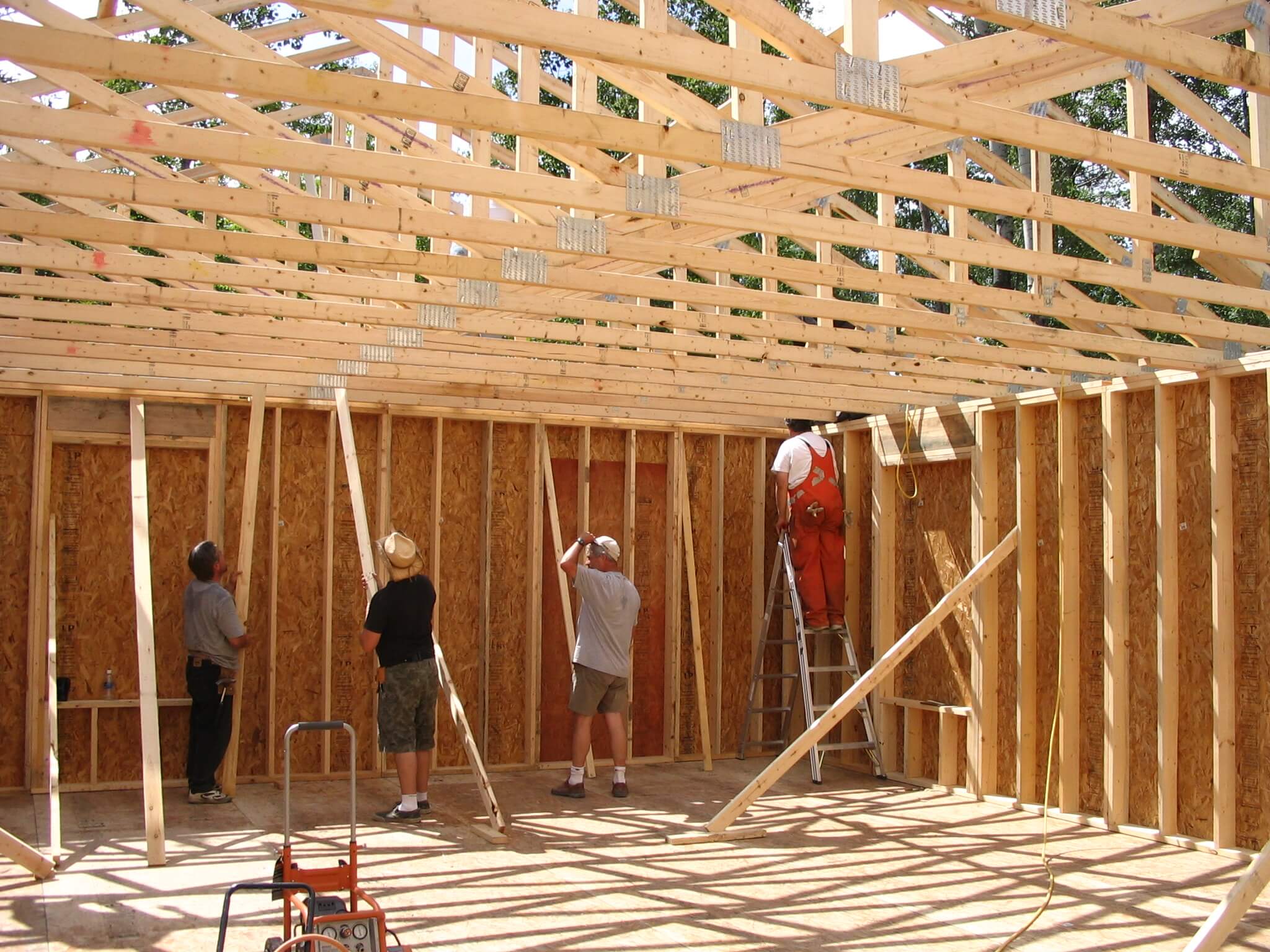
South Dakota’s land costs and lifestyle appeal attract owner-builders ready to invest sweat equity for financial gains. Prefab framing makes ambitious projects achievable:
Custom Home Professionals
Custom builders incorporate engineered framing seamlessly with distinctive South Dakota designs while safeguarding margins:
Multi-Property Development Operations
Projects involving multiple homes gain substantial benefits through engineered systems in South Dakota’s growing markets:
Step 1: Project Initiation Stage
Submit your plans or select from standard available models. Green-R-Panel’s team reviews your project requirements thoroughly. You receive a detailed quote based on your exact specifications.
Step 2: Custom AutoCAD Design
Your home’s structural components receive precision AutoCAD design. Every panel, joist, and truss fits perfectly together. You review and approve all layouts before manufacturing begins.
Step 3: Factory Production
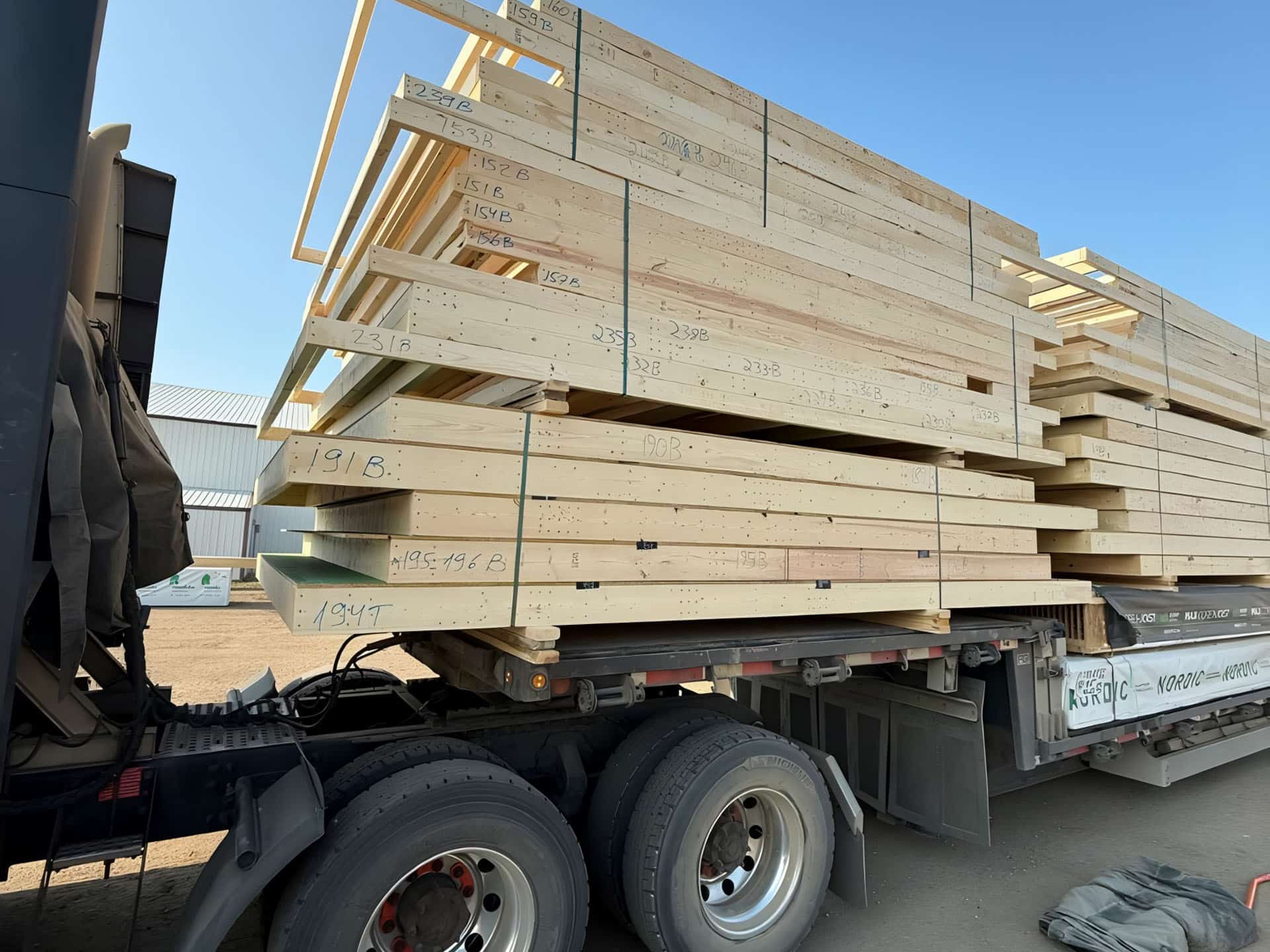
Precision wall panels and engineered floor and roof systems manufacture in controlled environments. Components load into logical shipments for efficient delivery to your site.
Step 4: Job Site Delivery
Components arrive in 1-2 logical loads based on project size. Installation sequence guidance accompanies every delivery package. This minimizes job site congestion and confusion throughout assembly.
Step 5: Installation Support
Phone and email support available throughout installation process. Component layouts, framing drawings, and sealed truss engineering documentation included with delivery.
Mount Rushmore State builders document measurable advantages from engineered framing systems:
Skilled Labor Savings: 60% reduction in framing labor costs typically saves $15,000-$30,000 on 3,000 square foot projects—meaningful money that upgrades features or reduces total investment.
Eliminated Material Waste: 15-20% waste reduction saves $5,000-$11,000 through controlled production versus field work where extreme temperatures damage materials.
Compressed Timelines: 6-8 week schedule reduction lowers carrying costs and enables project completion within single building seasons—essential in South Dakota’s climate where timing determines feasibility.
Enhanced Long-Term Value: Reduced callbacks and warranty issues from temperature-related problems increase profitability while strengthening reputation across Sioux Falls, Rapid City, and Aberdeen markets.
Engineered framing delivers best results for specific South Dakota scenarios across prairie and mountain regions:
Ideal Applications
Starting your project requires several key elements:
Typical project timelines include these phases:
Mount Rushmore State housing continues rewarding builders who deliver quickly while maintaining cost discipline. Median values reached $285,000 in January 2026, with limited inventory creating buyer competition. Opportunities favor efficient builders producing quality homes rapidly in corridors connecting Sioux Falls, Rapid City, and Aberdeen.
Traditional methods face mounting challenges: extreme temperature unpredictability, skilled labor scarcity particularly in rural areas, and compressed seasonal windows. Builders implementing efficient systems while leveraging South Dakota’s below-average costs will capture market share.
Whether planning Sioux Falls infill construction, Black Hills custom builds, or prairie development projects, engineered framing provides proven solutions for South Dakota’s challenging climate and competitive market environment.
South Dakota prefab homes shouldn’t require compromising between quality and budget. Engineered framing systems provide manufacturing precision matching your specifications while maintaining complete design authority and the Mount Rushmore State’s cost benefits.
Contact Green-R-Panel for South Dakota project consultation. From planning through delivery, we provide knowledge and support for successful construction in South Dakota’s demanding climate and efficient market.
Start your South Dakota-specific consultation and learn how engineered framing systems maximize your project while conquering extreme weather and labor challenges.