
Last updated: December 2025
Illinois presents a paradox that builders must understand. While over 13,000 Illinois residents searched for homes outside the state during winter 2024-2025, those staying face intense competition. In October 2025, home prices climbed 6.8% year-over-year to a median of $308,100, with 32.2% of homes selling above list price.
The market reveals Illinois’s challenge clearly. Homes sell in just 48 days on average, yet inventory increased only 0.5% to 47,008 homes—barely 3 months of supply. New listings dropped 1.5% to 13,729, while closed sales rose 3.4% to 12,139 homes. This seller’s market shows no signs of easing.
Construction costs reflect Illinois’s competitive position. Building ranges from $132 to $531 per square foot in 2025, with total costs averaging $285,000 to $865,000 for Illinois’s typical 1,632 square foot home. Chicago specifically commands $250-$650 per square foot, with luxury builds exceeding $500 per square foot. DuPage County communities like Naperville and Hinsdale often see $350-$450 per square foot for premium homes.
Illinois construction costs sit 4% above the national average. Labor costs represent 35-50% of total build costs, with skilled trades commanding premium rates. Illinois ranks among the highest property tax states at 2.08%, second only to New Jersey. Permit fees range $2,000-$7,500 depending on location, with Chicago permits potentially hitting $5,000.

Yet opportunities exist for builders who adapt. Home prices in Illinois show 10.1% growth compared to national 4.1% increases. Springfield surged 17.5% to $194,000 with homes selling in just 16 days. Despite challenges, Illinois rewards efficient builders who can deliver quality quickly.
For custom builders and owner-builders across Illinois, from Chicago to Springfield, the question becomes: how do you capitalize on market demand when costs escalate, labor remains scarce, and timelines determine success?
The answer isn’t traditional prefab homes with their delivery complications through Chicago’s urban grid. Strategic Illinois builders are adopting prefab framing systems—factory-manufactured structural components that arrive ready for efficient assembly while preserving complete design freedom.
Not all prefab approaches deliver equivalent results. Understanding the differences matters for Illinois’s competitive market.
Complete modular units arrive on trucks. You select from manufacturer catalogs with restricted modifications. Factory scheduling controls timing—expect 4-6 months from order to completion. Quality stays consistent but finish selections are limited. You need crane access and exact foundation work—challenging in established Chicago neighborhoods or tight suburban lots. Customization gets restricted to pre-approved options. Critical decisions happen during factory production, minimizing your local control over finishes Illinois buyers increasingly demand.
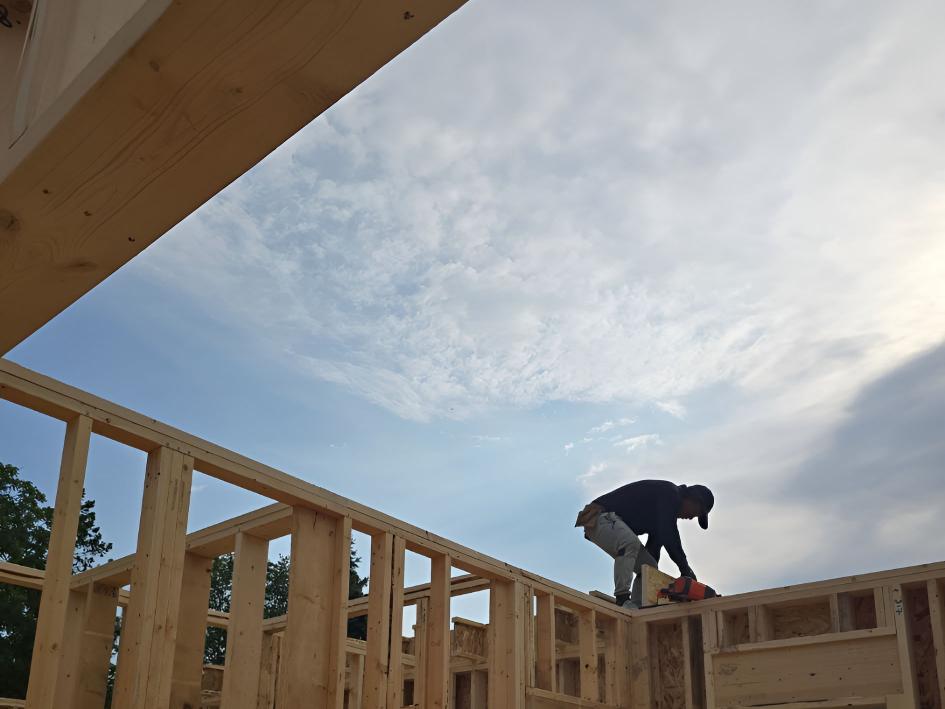
This approach works entirely differently. You receive precision-manufactured structural components—wall panels, floor systems, roof trusses—built to your specifications. Complete design flexibility means any architectural concept works from Chicago brownstones to suburban colonials. You control construction timing entirely—critical when competing in Illinois’s fast-moving market. Precision structural elements arrive with unlimited finish material choices. Standard truck delivery works through Illinois’s roads. Change finishes, layouts, and systems throughout construction. You maintain complete control over contractors and material sourcing.
The Illinois advantage? Prefab framing delivers factory precision while you control design, finishes, timing, and contractor relationships—essential for capitalizing on market demand while managing costs.
Get your free copy of The DIY Owner-Builder’s Step-by-Step Guide to Shell Completion — a simple, practical roadmap to help you plan, frame, and complete your home’s shell with confidence.
Enter your email to download and receive helpful tips, updates, and exclusive insights to keep your project on track.
Urban Delivery Complications: Moving oversized modular homes through Chicago’s tight streets, established suburbs with mature trees, or historic neighborhoods creates serious logistical problems. Many desirable building sites can’t accommodate traditional prefab delivery requirements, especially in communities with overhead restrictions.
Foundation Precision Challenges: Illinois’s soil conditions—particularly high clay content in many areas—require specific drainage considerations. Achieving millimeter-perfect foundations that modular homes demand becomes particularly challenging. One error means expensive delays in a market where timing determines profitability.
Limited Regional Understanding: Most national prefab manufacturers don’t comprehend Illinois’s building codes, property tax implications, or regional variations. Your local inspector understands Illinois—the prefab manufacturer’s team doesn’t.
Cost Reality Beyond Marketing: Advertised pricing excludes Illinois’s reality: site preparation, utility connections, delivery coordination through challenging routes, crane rentals, customization fees, and permit costs ranging $2,000-$7,500. Final costs frequently exceed quality custom construction alternatives.
Prefab framing systems address Illinois’s construction challenges by manufacturing structural essentials in controlled factories, then delivering components that assemble efficiently regardless of jobsite variables.
Custom wall panels, engineered floor systems, and roof trusses arrive precision-manufactured to your plan specifications. Components get built indoors where Illinois weather can’t interfere, then shipped ready for rapid assembly.
Your crew isn’t battling weather, material inconsistencies, or dimensional variations during framing. They’re assembling factory-manufactured components built to exact specifications.
Factory-Manufactured Wall Panels
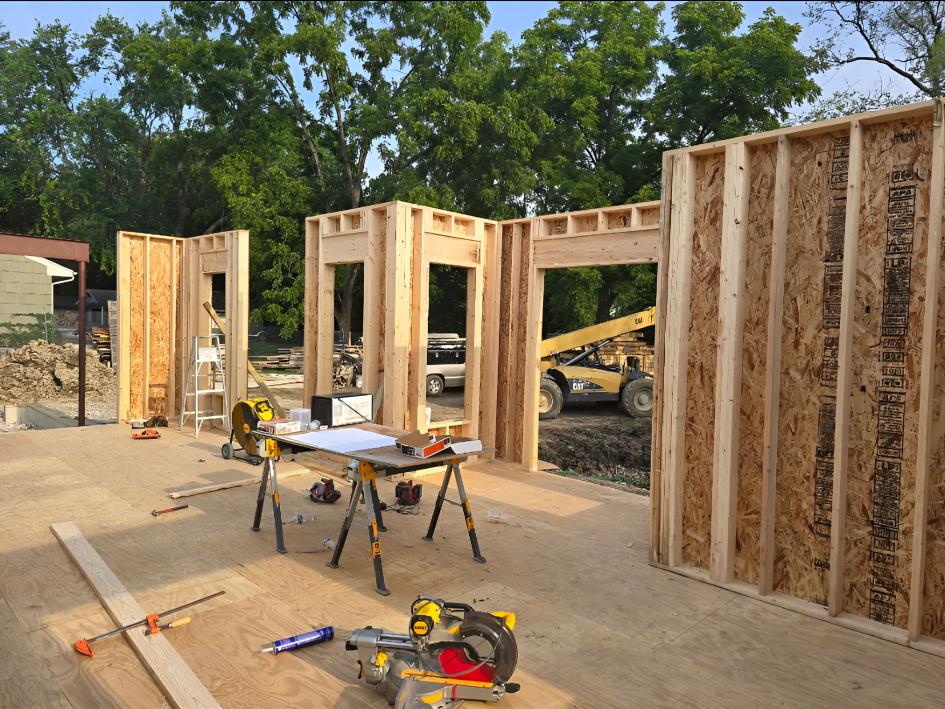
Panels arrive ready for immediate installation across Illinois’s varied locations. Standard and custom heights from 8′ to 12’+ accommodate Illinois’s architectural diversity from Chicago contemporary to traditional prairie styles. Panel lengths from 8′-16′ depending on your design. 2×4 or 2×6 framing with spacing meeting Illinois building codes. Advanced sheathing options including ZIP system for moisture management. Window and door openings precision-framed per your plans.
I-joist and open web truss options manufactured to plan specifications. L/360 minimum performance with upgrades for demanding applications. Spacing from 16″ to 24″ on center based on load requirements. Pre-framed openings for stairs, utilities, and access. Joist hangers and hardware included.
Custom trusses manufactured to your specifications. Sealed truss drawings included for permitting. Manufactured meeting Illinois’s regional requirements per local codes.


Traditional framing in Illinois takes 4-8 weeks depending on weather and crew availability. Prefab framing systems compress structural work to 1-3 weeks regardless of conditions—critical when 32.2% of homes sell above list price and inventory sits at just 3 months supply.
Illinois Reality: A 3,400 sq ft home in DuPage County completed its structural shell in 2 weeks—traditional framing would have required 6+ weeks. The builder moved to interior work four weeks ahead of schedule, capturing buyer demand faster than competitors in a market where homes sell in 48 days.
With Illinois unemployment at 4.8%—one of the nation’s highest—construction still faces persistent labor challenges. Finding experienced framers grows increasingly difficult despite available workers. Prefab framing systems reduce skilled framing requirements by 60% while maintaining quality.
Owner-Builder Advantage: Illinois’s complex building codes and high property taxes make owner-building particularly challenging. Prefab framing transforms complicated structural work into achievable assembly with detailed instructions and precision components.
Factory-controlled manufacturing eliminates variables compromising Illinois construction. No material degradation from weather exposure. No dimensional changes from humidity or temperature swings. No quality inconsistencies from rotating crews.
Finish Trade Efficiency: Consistent dimensional tolerances mean drywall, flooring, and trim contractors work efficiently without constantly adapting to framing irregularities—essential for the quality finishes Illinois buyers expect.
Illinois construction faces extreme cost pressures with building costs 4% above national averages and property taxes second-highest nationally. Prefab framing locks in material costs during manufacturing, protecting budgets from price fluctuations while reducing on-site waste.

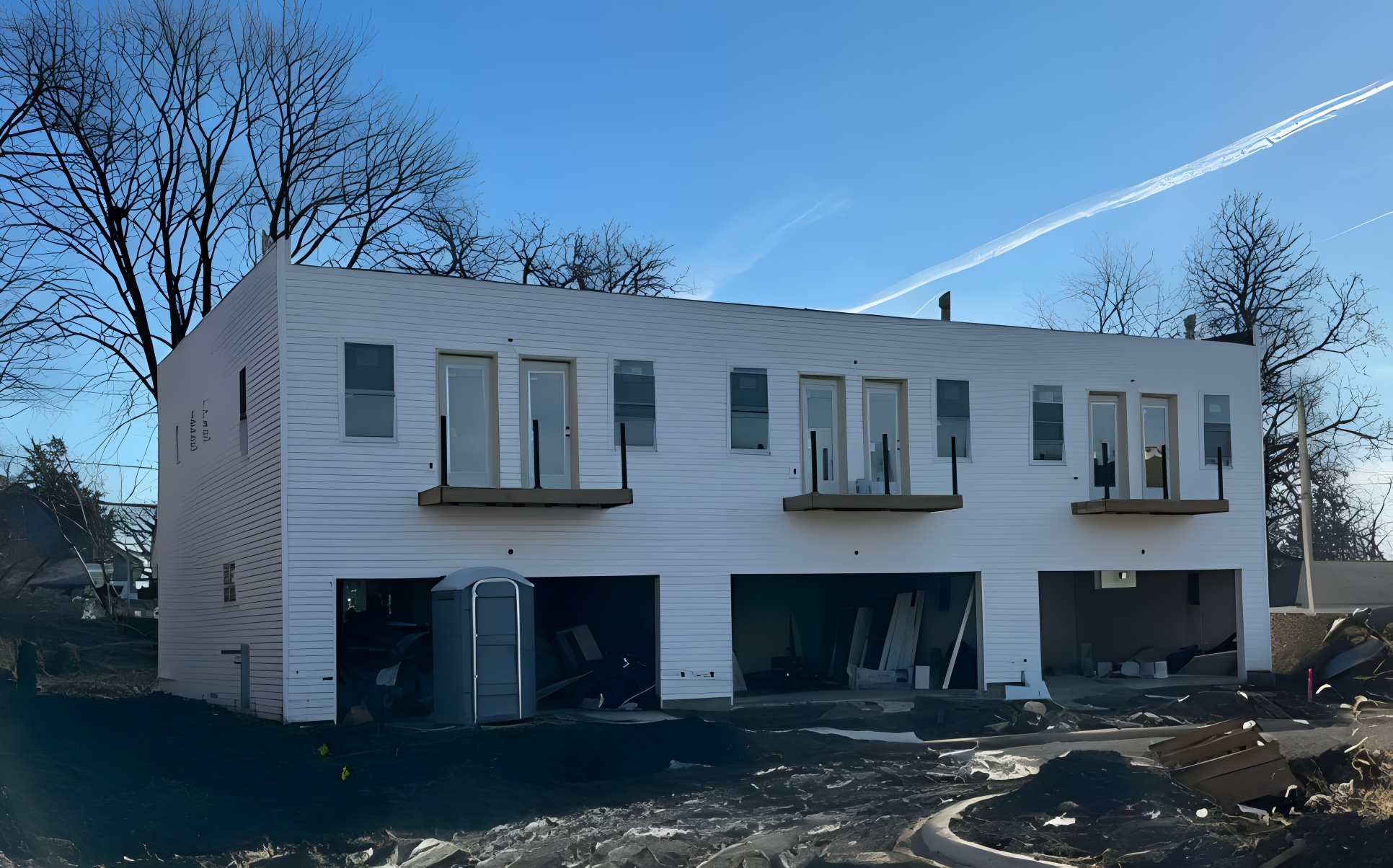
Illinois’s regulatory complexity and high costs make owner-building particularly challenging. Prefab framing systems transform difficult construction into achievable projects:
Professional builders find prefab framing integrates seamlessly with unique designs while improving margins:
Multi-unit projects benefit from prefab framing advantages in Illinois’s competitive market:
Phase 1: Project Review
Submit architectural plans or select from standard models. Green-R-Panel’s team reviews your requirements and provides consultation with accurate pricing.
Phase 2: Design Development
Structural components are designed using AutoCAD software. Components manufactured to your specifications and Illinois building codes. You review and approve layouts before manufacturing.
Phase 3: Controlled Manufacturing
Wall panels and engineered systems built in climate-controlled facilities. Quality control ensures components meet exact specifications.
Phase 4: Coordinated Delivery
Components organized for efficient delivery considering your timeline. Delivery coordinated with site readiness. Complete installation documentation provided.
Phase 5: Ongoing Support
Sealed truss drawings included with every project. Comprehensive customer support available throughout your construction process.
Illinois builders consistently report significant advantages with prefab framing systems:
Labor Cost Reduction: 60% reduction in skilled framing labor typically saves $18,000-$32,000 on a 2,500 sq ft home
Material Efficiency: Controlled manufacturing reduces waste by 15-20%, saving $5,000-$11,000 in materials
Timeline Acceleration: 4-6 week timeline reduction saves carrying costs and accelerates completion—critical in Illinois’s fast-moving market
Quality Improvements: Reduced callbacks and warranty claims improve long-term profitability
Prefab framing systems deliver optimal results for Illinois’s construction needs:
Ideal Applications:
Essential Information:
Realistic Timeline:

Illinois’s housing market rewards builders who adapt to demand while managing costs. With home prices rising 10.1% year-over-year and 26.3% of homes selling above list price, opportunities exist for efficient builders who can deliver quality quickly.
Traditional methods face increasing challenges from labor costs, regulatory complexity, and timeline pressures in one of America’s most competitive markets. Builders who master efficient construction methods while navigating Illinois’s cost pressures will lead the market.
Whether you’re planning a Chicago urban home, suburban Naperville project, or Springfield development, prefab framing systems provide proven solutions for Illinois’s demanding building market.
Illinois prefab homes don’t require compromising quality or accepting delays. With prefab framing systems, you get factory precision manufactured to your specifications while maintaining complete design freedom and the cost control necessary to succeed in Illinois’s competitive market.
Contact Green-R-Panel today to discuss your Illinois project. From initial consultation through delivery, we provide the expertise and support needed for successful construction in Illinois’s challenging building environment.
Get started with an Illinois-specific project consultation and discover how prefab framing systems navigate the Prairie State’s competitive building opportunity.